 Erin Lanahan

It’s a saying found on many t-shirts and drink tumblers for sale in many gift shops and rest stops throughout New Jersey: “Jersey girls don’t pump gas, we pump our fists!” The Garden State is the only state in America where it’s illegal to pump your own gas. If you’re a NJ resident, you already know that when you pull up to the gas station, you won’t have to get out of your car to fill up the tank. For those visiting NJ and are just learning that someone else will be taking care of their gas needs, there may be a lot of questions about this process. Read on for a quick history of pumping gas in New Jersey and what to expect when you pull up to the gas station.
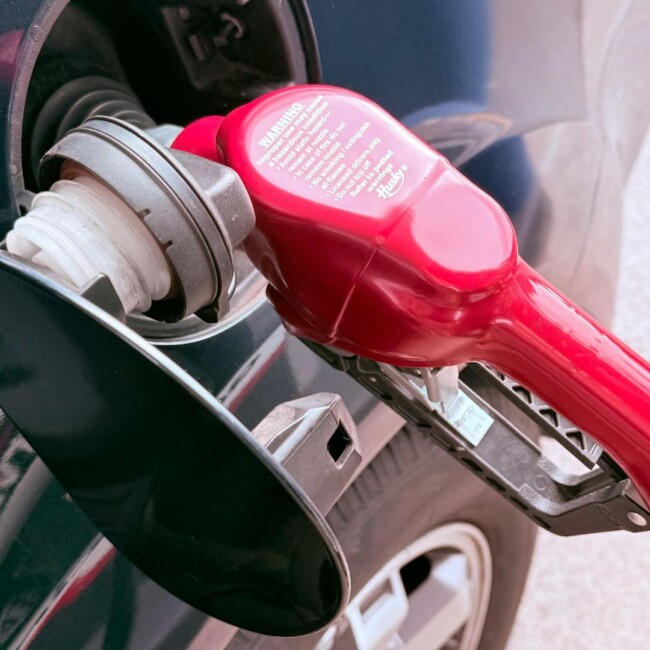
The Ban On Self-Service Gas Stations
The Retail Gasoline Dispensing Safety Act took effect in 1949 and states, “It shall be unlawful for any attendant to…Permit any person who is not an attendant to dispense fuel into the tank of a motor vehicle or any container.”
Read More: The Stories Behind Old Hoboken Signage
The law cites the reasoning as a safety concern. “Because of the fire hazards directly associated with dispensing fuel, it is in the public interest that gasoline station operators have the control needed over that activity to ensure compliance with appropriate safety procedures,” per the Safety Act.
However, it wasn’t safety alone that motivated the creation of this law. In the 1940s, Irving Reingold opened a self-service gas station in Hackensack that sold gasoline at a lower price than his competitors. When those competitors tried and failed to intimidate Irving — think The Godfather style of intimidation — they turned to legislation. The Gasoline Retailers Association proposed the self-service ban and it was approved in a short amount of time.


Push To Allow For Self-Service In NJ
The days of full-service stations in the Garden State could be numbered. Republican Senator and former candidate for Governor Jon Bramnick recently introduced a bill that would allow NJ drivers to pump their own gas. Under this proposal, NJ gas stations with four or more pumps would have to provide both full and self-service options between 8AM and 8PM. It would also require these stations to have an attendant on-site to help anyone with a disability.
“I have heard from a lot of people who do not want to pump their own gas, I’ll tell you that,” Bramnick told CBS News.

Not pumping our own gas seems to be a popular opinion in NJ. In 2022, a poll from Monmouth University reported 60% of residents oppose a policy that would allow stations to go fully self-service. 55% of residents say that NJ being the only state that does not allow self-service is a good thing for the state.
Another self-service bill was introduced back in 2022, but failed to pass the state Assembly Commerce and Economic Development Committee.
This proposal, known as the Motorist Fueling Choice and Convenience Act, still has a way to go before it could become law. As of March 2025, it still has to get out of committee and be passed by both the State Senate and Assembly, and then Governor Phil Murphy would have to sign off on it.
What To Do When You Visit a NJ Gas Station
Most Jersey residents can repeat, “20, credit, regular,” in their sleep. For those new to the Garden State or passing through for the first time, it can be jarring to visit a full-service station. Here’s a quick guide for when you need to fuel up in NJ.
You drive up to a gas pump like you normally would at any gas station with your car’s gas tank near the pump. Instead of hopping out of the car, you’ll put down your window and shut off the car’s engine.
The attendant will come up to your window and maybe give you a greeting. (Remember, this is New Jersey. You may not always get a warm hello). This is when you’ll have your cash or credit card ready to go. You’ll tell the attendant how much gas you want and what type of gas you need. For instance, if you need $20 of regular gas and you’re paying with your credit card, you’ll tell the attendant, “20, regular, credit,” and hand them your card. If you need to fill up the tank and you have cash, you can say, “Fill it up, regular, cash.”
Then you can continue sitting in your comfy driver’s seat while the attendant fills up your tank. Once it’s done, the attendant may ask if you need a receipt. Otherwise, they’ll close your gas tank and give you the all clear. Then you drive away, impressed by how simple it was for someone else to pump gas for you.
For those wondering if tipping is necessary, it is not. There are dozens of Reddit questions and Facebook discussions about this topic, but NJ locals all agree that tipping gas station attendants is not needed. Gas station attendants are paid at least minimum wage across the state. However, if an attendant does a little something extra, like cleaning your windows while you wait for your tank to fill up, it’s not unheard of to throw them an extra dollar or two.
When NJ Residents Drive Out Of State
NJ residents who have yet to experience a self-service gas station, this section is for you. There may be a situation where you’re taking a big road trip and need to refuel your car all by yourself.
AAA breaks it down step-by-step in this helpful guide. Here are the basics: you pull up to the pump like normal. You make sure your gas tank is open and pull out your method of payment. If you’re paying at the pump, the screen is usually pretty straightforward about when to insert your card and maybe enter your zip code. If you’re paying inside, you’ll want to remember the number of your pump and tell the cashier how much gas you want at that pump. For instance, you’ll say, “$20 at pump number four.”
Then you’ll select the fuel grade: regular, mid-grade, or premium. This is when you’ll take the nozzle and put it in your tank and start filling your tank. Lo and behold, you’re pumping your own gas.
See More: The History Behind Essex County Town Names
Once you’re done, you’ll put the nozzle back in the pump and close your gas tank. Then you can drive off knowing you’re refueled for your adventure.